
Rethinking Tourism in the Amazon: Community, Collaboration and a New Model for the Future
Co-founder Maudie Tomlinson is just back from the Brazilian Amazon — and it’s not something you ever fully leave behind. There are places in the world that shift your perspective quietly, but permanently. The Amazon is one of them.
Not because it demands attention, but because it dissolves the illusion that we are separate from the world around us. Here, everything is connected — the river, the forest, the sky — and, whether we recognise it or not, we are part of that system too.
It was along the Rio Negro, deep in and around Parque Nacional do Jaú, that this came into sharper focus. What began as an Innovation Lab hosted by Pure and Ruy Tone, founder of Katerre Expeditions and Mirante do Gavião Lodge — a gathering of industry experts, change makers, conservationists, local guides, spiritual leaders, architects, investors and development practitioners — became something more.
A space not only to explore how tourism can benefit communities, but to question how we relate to nature, to each other, and to what we cannot fully explain.
“In nature, everything is about collaboration and evolution.” — Marko Brajovic
A Different Kind of Tourism
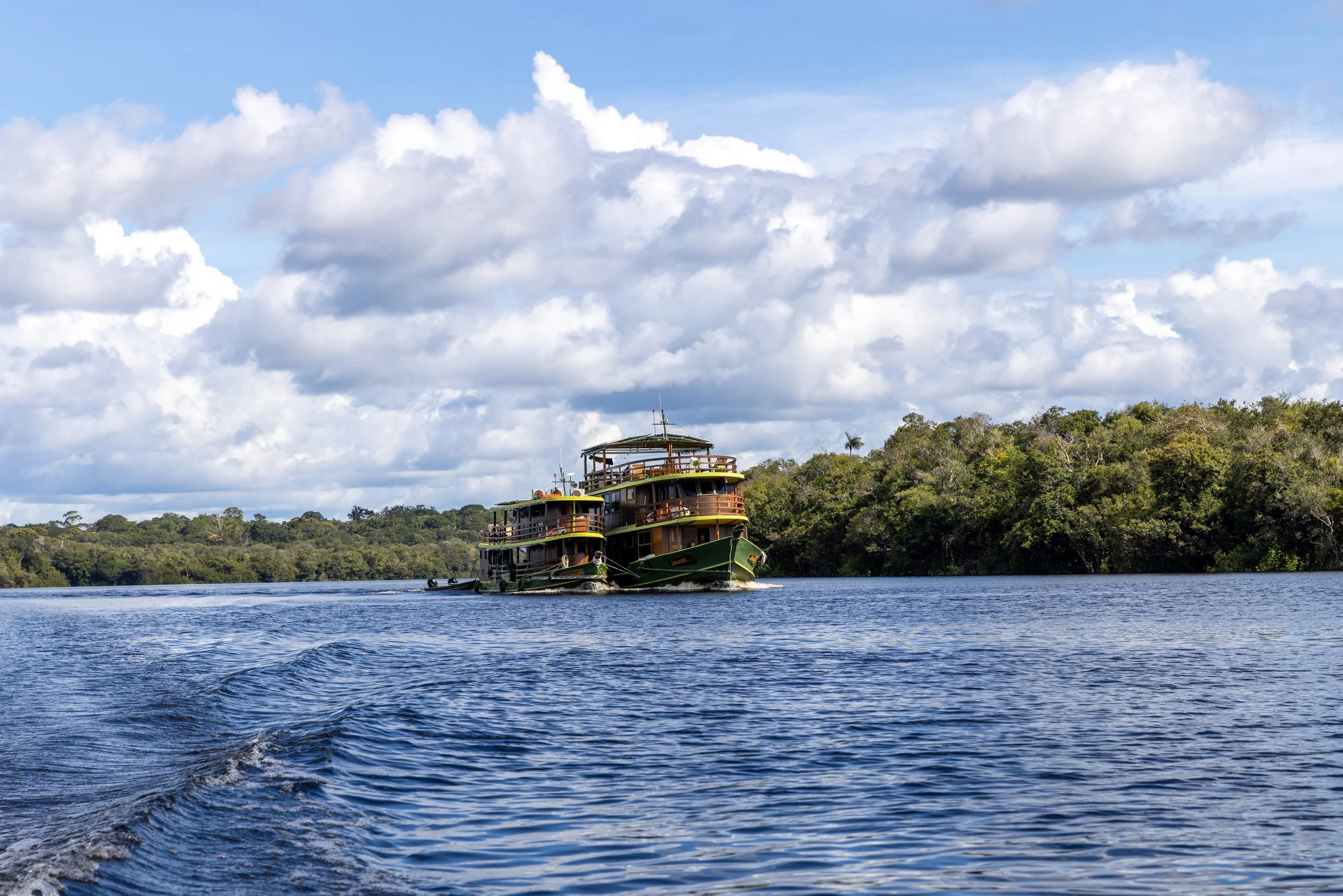
Tourism in this part of the Amazon remains light-touch and low-impact. Most visitors stay closer to Manaus, whilst further north — over 200 kilometres upriver — a different model is emerging across a 100km stretch of river connecting more than fifty communities.
For Ruy, tourism here is not designed to extract value, but to create it — for communities, for culture, and for the forest itself.
As he shared, “the Amazon is not just a destination. It is mother, source, power, learning and direction.”
Hosting the PURE Innovation Lab here felt like, in his words, “a stage of encounters that point paths to the future of tourism” — bringing together people, ideas and intent in service of something bigger.
Because here, community and conservation are inseparable.
Local Solutions, Rooted in Place
In Novo Airão, this philosophy is visible through the non-profit Fundação Almerinda Malaquias, now led by Ruy.
What began with discarded wood from a former shipbuilding industry has become a thriving, community-led model supporting around fifty families. Through a simple but equitable model — 70% to artisans, 10% to the shop, and 20% to education — livelihoods, skills and opportunity are being created locally.
In a region with some of the lowest education indicators in Brazil, the foundation also provides a learning centre for more than 200 children aged 6–17, offering classes and activities beyond the municipal system, including environmental stewardship.
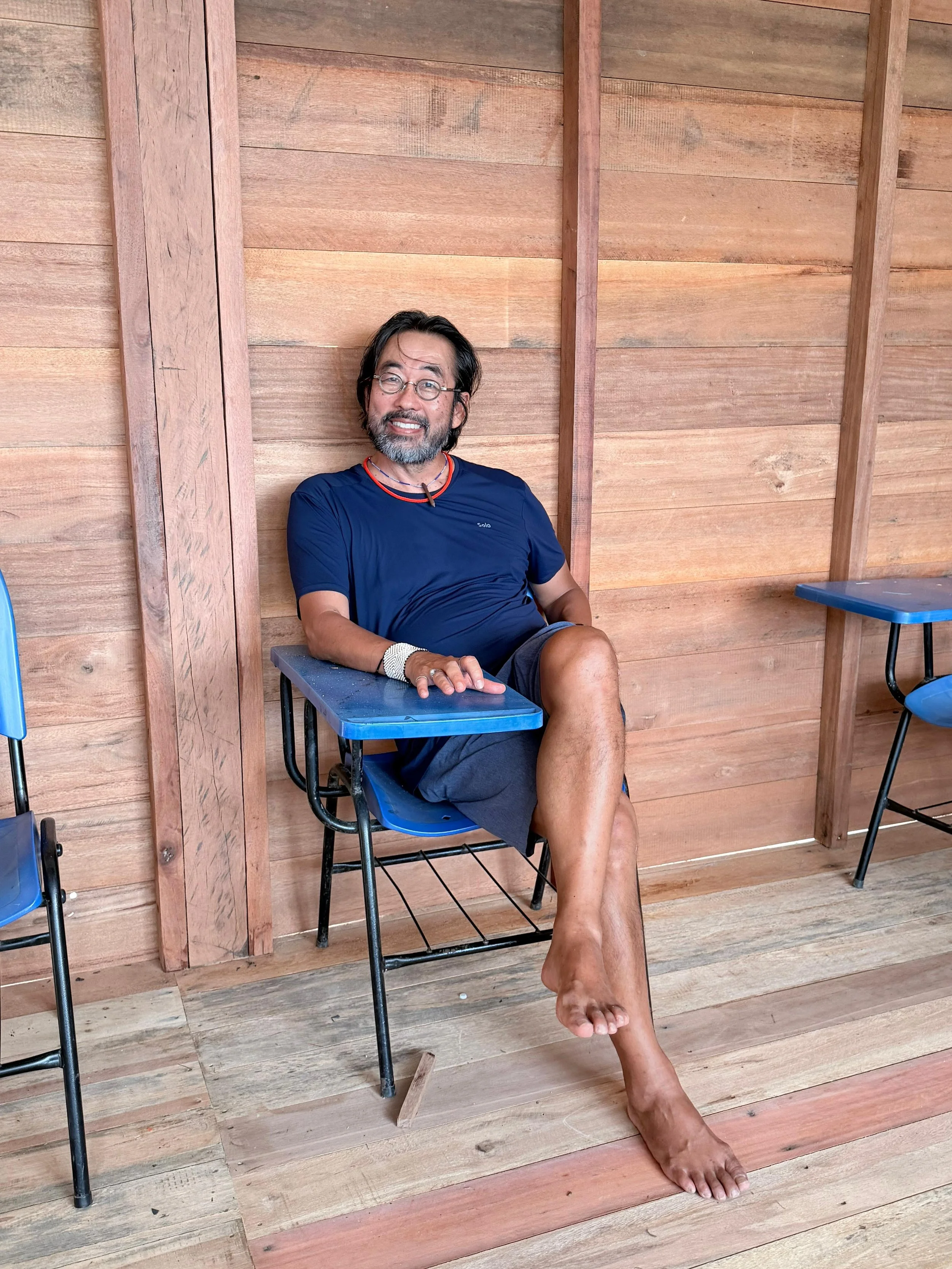
This thinking extends into the community school-building programme along the river, developed with biomimicry architect, Marko Brajovic.
As Marko explained, “solutions gradually evolve through a continuous process of learning from one community to another.”
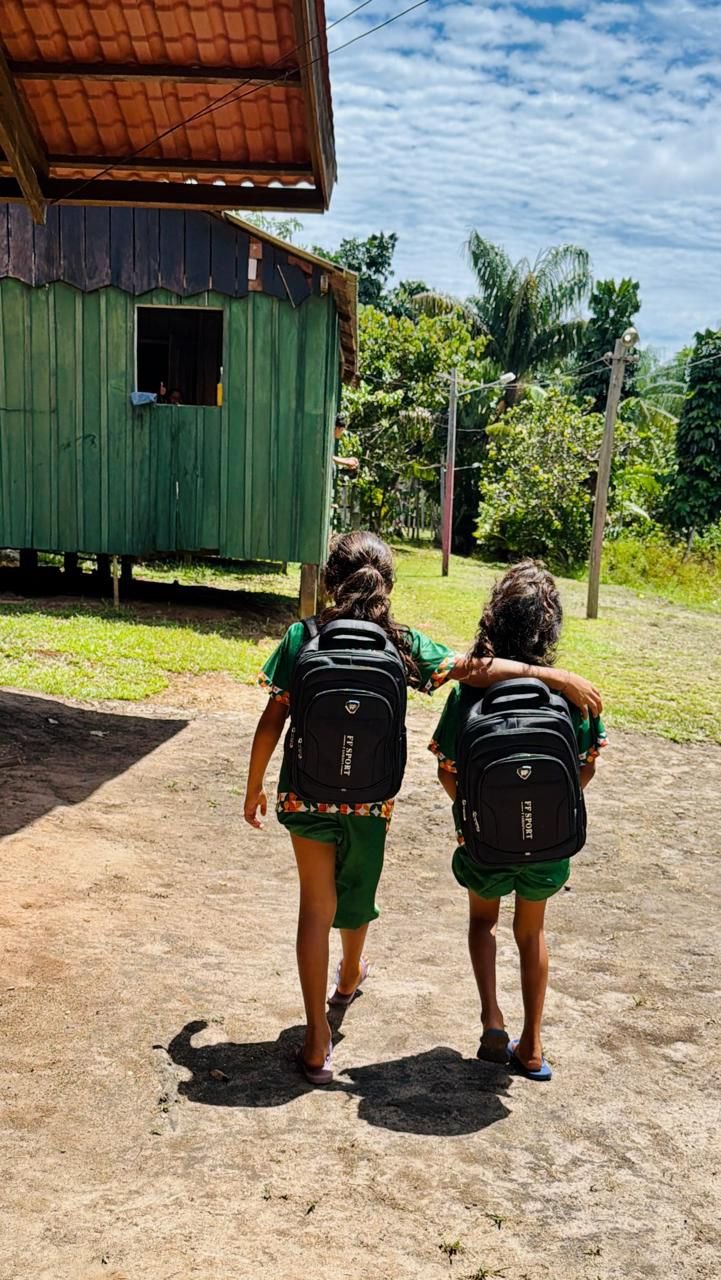
Each of the 23 schools are adapted to its environment — designed for airflow, built with local materials, and assembled by communities themselves. Now forming a growing network along the river, they are becoming hubs for education and connection. The foundation provides the funding for the build, and the municipality provides the teaching staff and funding for the ongoing operations of the school.
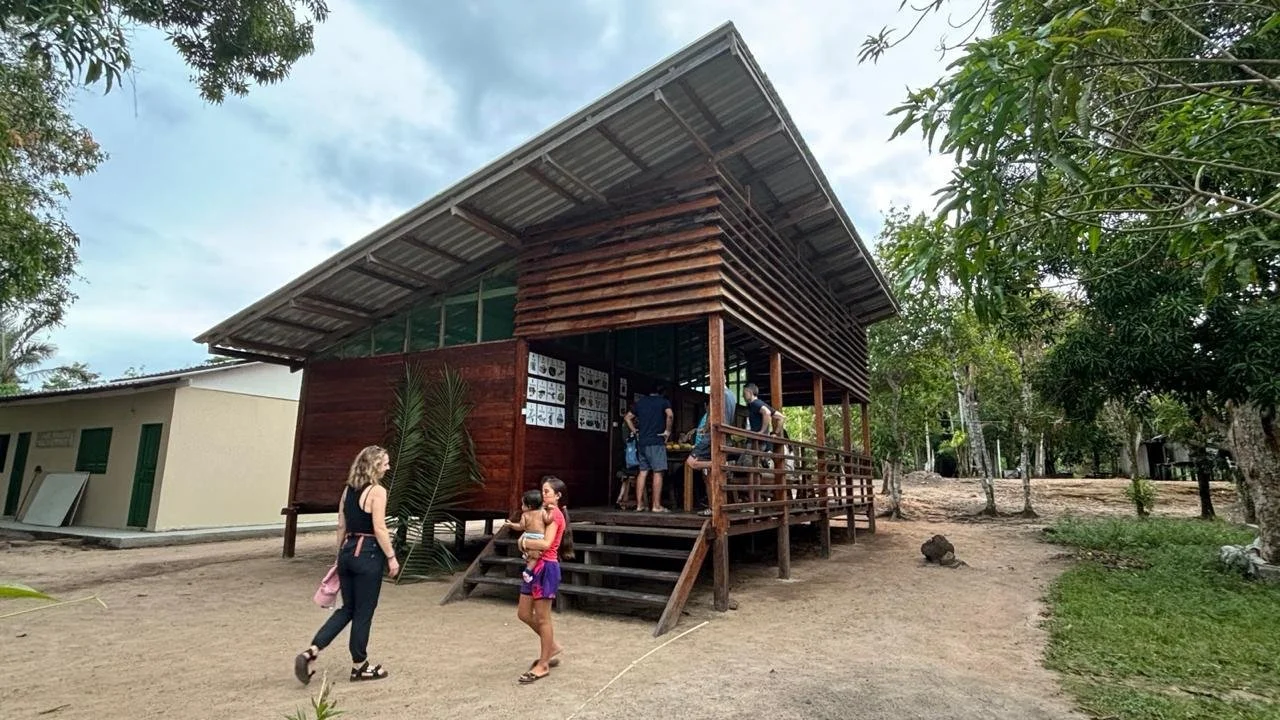
Their impact goes far beyond infrastructure.“Each community is deeply transformed by the presence of a school,” Marko reflects. Outside influences have eroded indigenous knowledge, and the schools also provide a space for young people to learn language and about the forest. The schools are also intentionally the largest structures in each village, larger even than churches, placing education at the centre of community life, as something sacred.
During visits to Mirituba and neighbouring communities, that transformation was felt in the warmth of the welcome extended to Ruy and the team — not as outsiders arriving, but as collaborators and partners in a shared endeavour. There was a genuine sense of ease in these relationships. Not hierarchical, not imposed, but built on trust, mutual respect, and a recognition that knowledge flows in both directions.
Each school is accompanied by teacher accommodation, either newly built or adapted from existing structures, ensuring that educators living in these remote communities have safe and comfortable homes, and the conditions needed to fully participate in community life.
Culture, Language and Loss
One of the most powerful moments came from hearing about the loss of language. With it comes the loss of stories — and with stories, identity and connection to place.
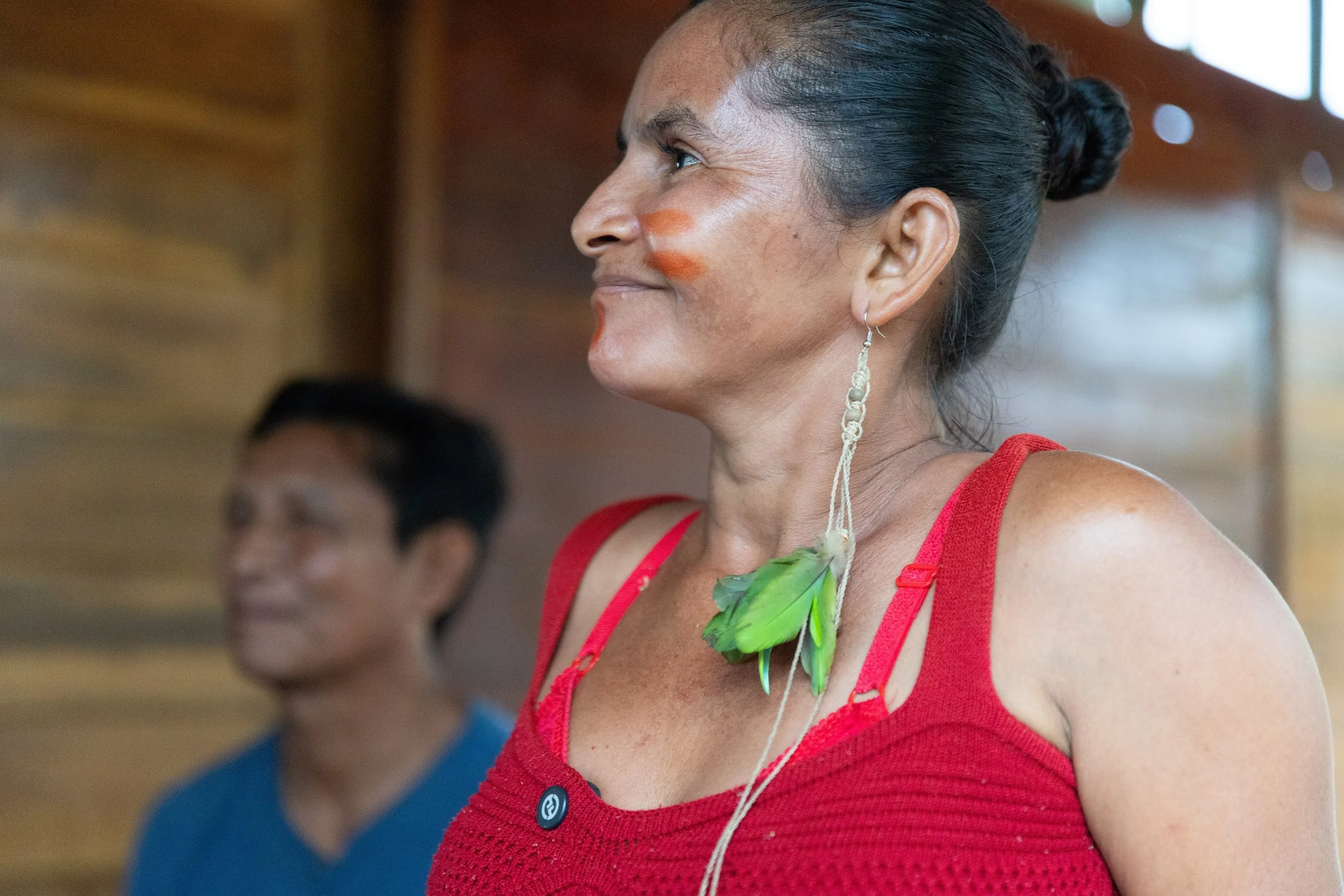
In Comunidade Indígena Bom Jesus do Rio Pachéco, we met a young teacher from the Tukano community working to reintroduce Indigenous language into local education — bringing it back into everyday use for younger generations, while learning and reclaiming it herself. Because language is not just communication — it is a way of understanding the world.
But culture lives not only in words. It is carried through food, through ritual, through the everyday practices that connect people to place.
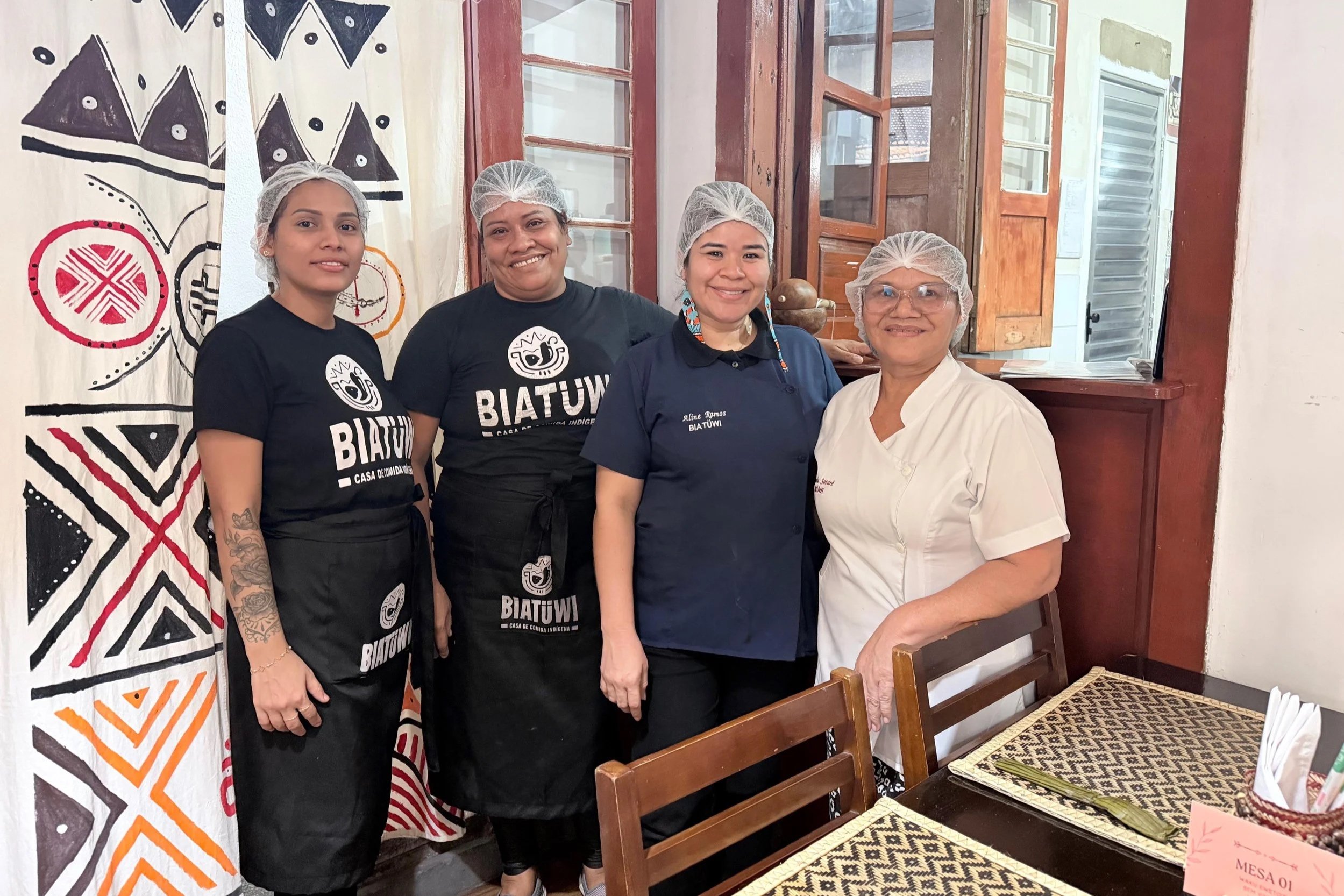
In Manaus, we were introduced to Biatüwi — a women-led social project supported by Caxiri Restaurant, which was created to celebrate and elevate Amazonian cuisine more broadly.
While Biatüwi specialises in Indigenous cuisine, sourcing ingredients from deep upriver and working closely with Indigenous communities, Caxiri has played an important role in shaping and championing the wider food culture of the region — including at Mirante do Gavião. At the heart of this work is Débora Shornik, Ruy’s partner and the mentor behind Biatüwi, whose vision has helped create a platform for Indigenous women to share their culture through food.
We were struck to learn that Biatüwi is the only restaurant in Brazil dedicated specifically to Indigenous cuisine. And yet, even in that small glimpse, it felt like something much bigger — a quiet but powerful expression of identity and pride.
A reminder that preserving language, food and tradition are not separate efforts, but deeply interconnected acts of cultural resilience. In the Amazon, cultural revitalisation is not just about looking back. It is about creating a future where identity, knowledge and connection to place can continue to thrive.
The Quiet Urgency of an “Empty Forest”
Despite its beauty, the forest is not as full as it once was.
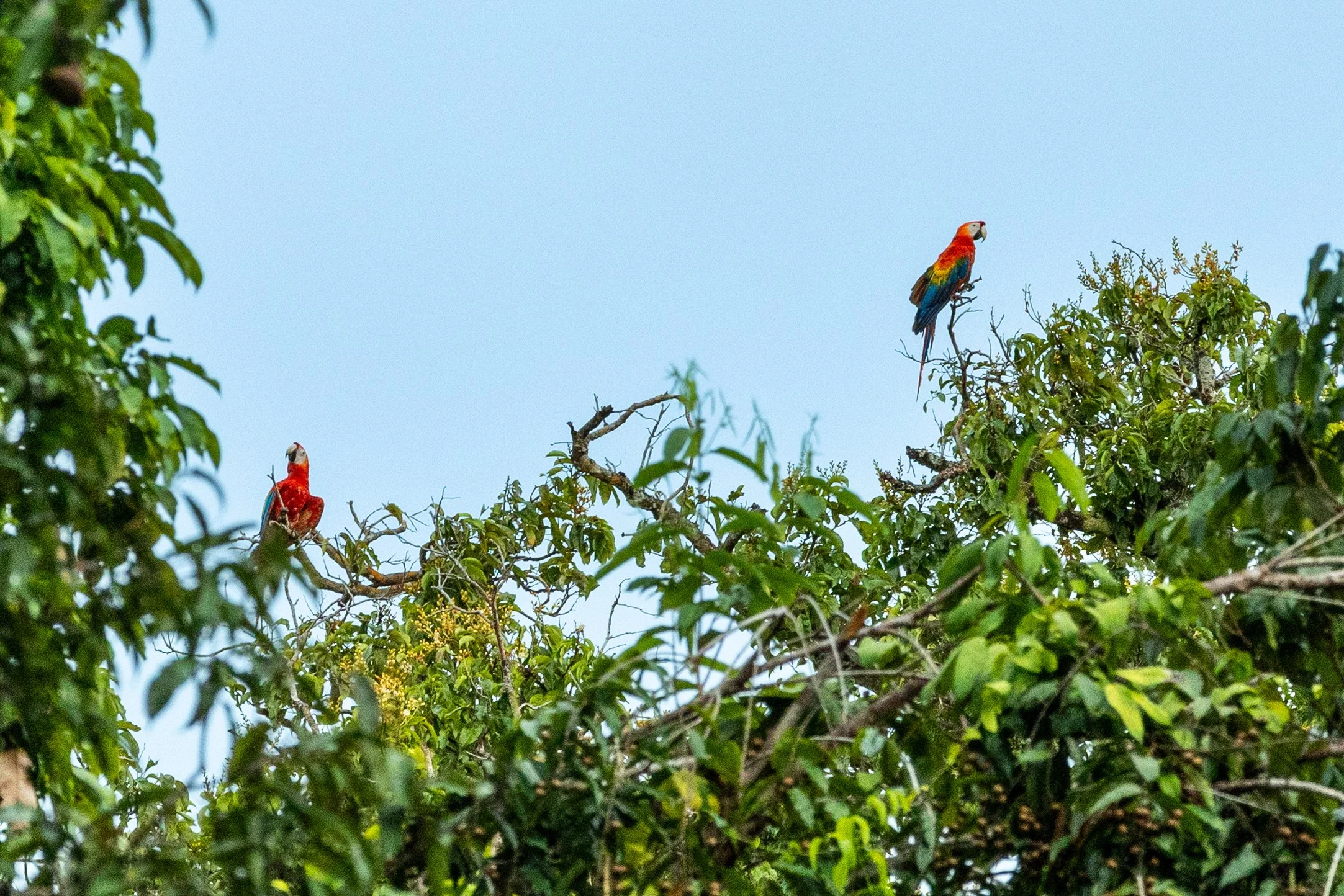
Wildlife has declined — driven by hunting, fishing, and demand from urban centres. To an outsider, it felt abundant from scarlet macaws, toucans, sloths, monkeys and caiman but conservationist Roberto Klabin warned of “empty forests.”
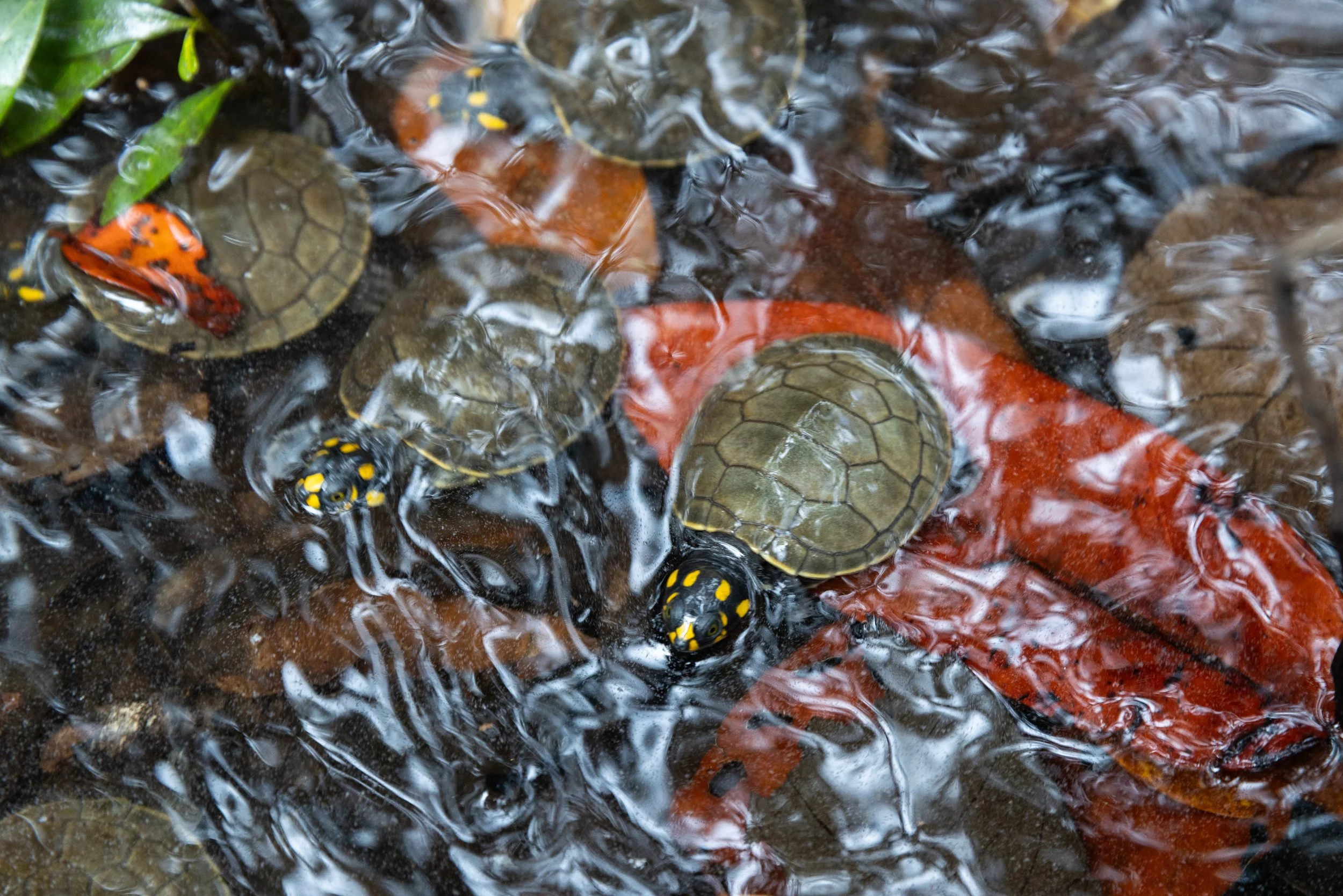
Community-led initiatives, funded by Katerre and supported by the Wildlife Conservation Society, are working to combat illegal trafficking of wildlife, including Amazon turtles. Eggs are protected for up to 90 days, hatchlings are nurtured before release, and survival rates are significantly improved.
Visitors are invited to participate in releasing hatchlings — creating a direct connection between conservation and economic value.
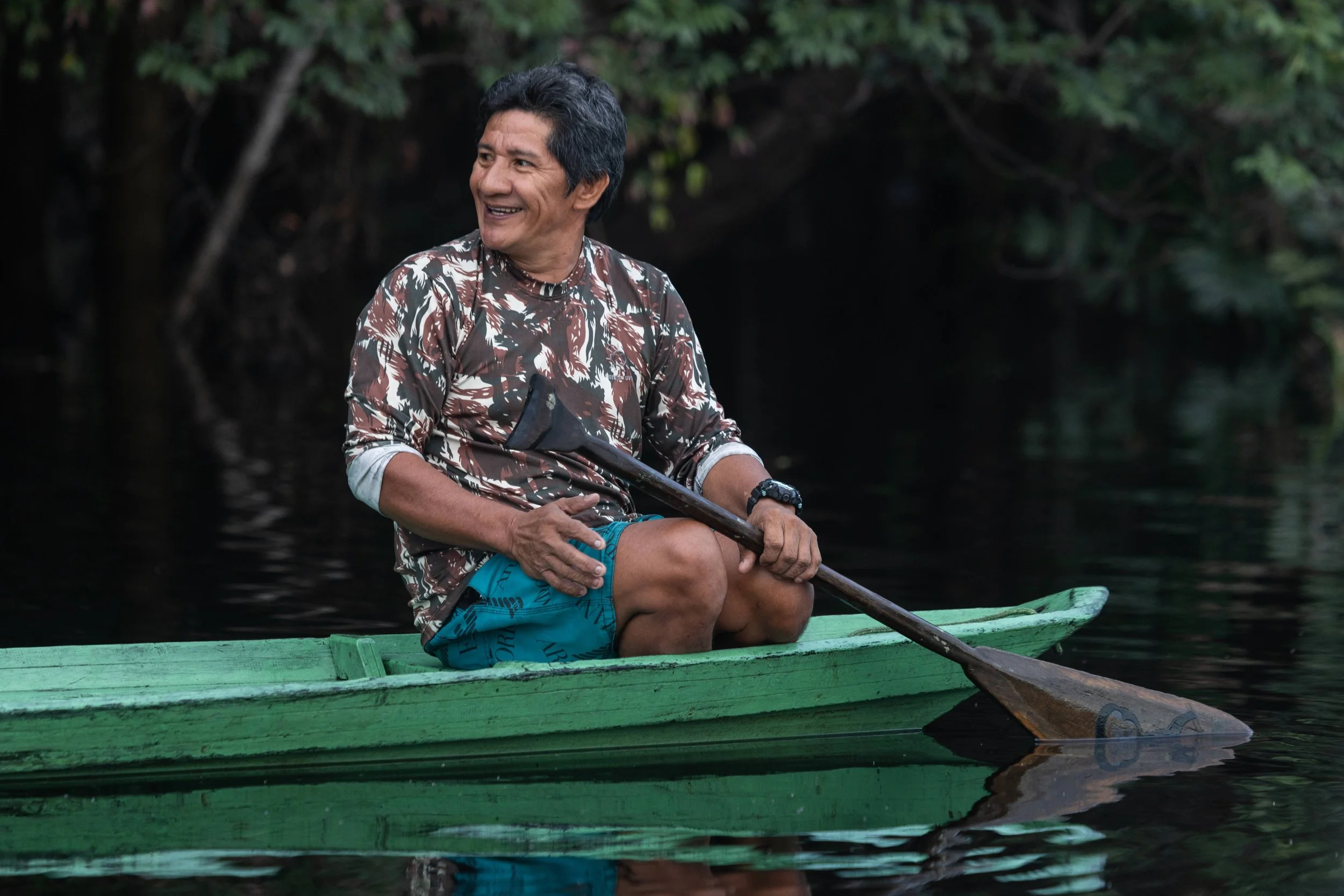
Community leader Siba oversees the programme, with these initiatives helping release more than 6,000 turtles each year. Local families are paid per egg protected and supported to safeguard nesting sites during the season.
Further upriver, projects are monitoring key fish species such as pirarucu, working with communities to manage stocks and restore ecological balance.
These interventions may be small in scale, but they are profound in impact. There is still much to be done — and greater collaboration is needed to restore biodiversity at scale. Initiatives such as SOS Pantanal were discussed, offering collaborative models that could be adapted to the Amazon.
The Power of Gathering
Over the course of the week, we explored themes of birth, community, growth and legacy. But it was in the closing circle — sitting together on the riverbank — that something deeper emerged. We spoke about the challenge of translating what we had experienced — something felt, rather than seen — into language others could understand.
What became clear was the power of intentional gathering. Bringing together diverse perspectives created space not just for ideas, but for alignment, empathy, and shared purpose — combining everything from data modelling to spiritual understanding to design pathways for tourism development.
There is an art to this kind of convening. Bella, Programme Manager at PURE, held that space — guiding conversations that moved fluidly between reflection and action, and enabling ideas to emerge collectively. These kinds of in-destination innovation think tanks may be one of the most powerful tools we have for addressing complex challenges like those facing the Amazon.
In an increasingly secular world, a final question emerged: What do we hold as sacred now?
Standing in the Amazon, the answer felt close. It is Mother Nature — not as an abstract idea, but as the system that sustains all life. A system we are part of, whether we acknowledge it or not.
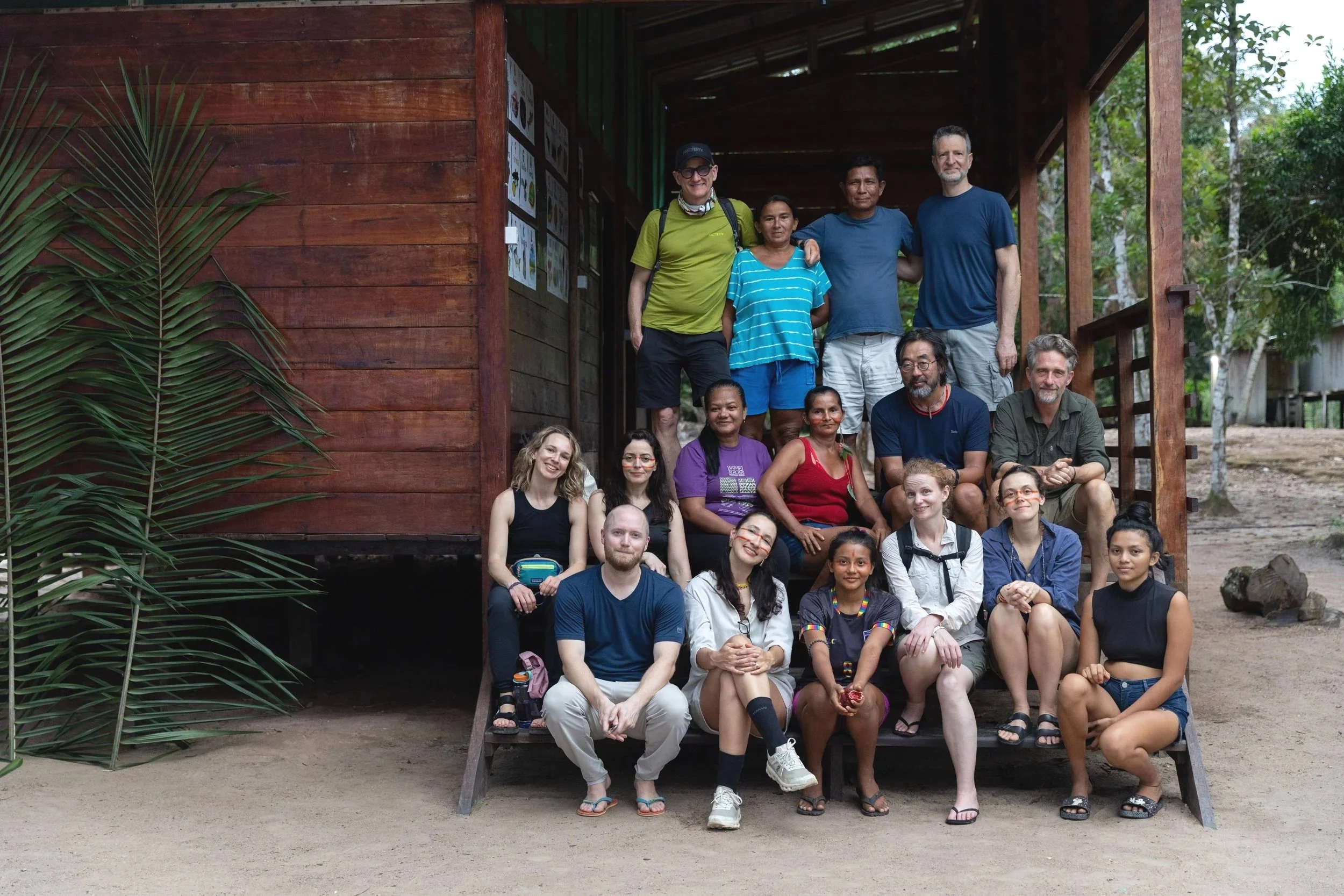
With thanks to Ruy Tone and PURE for bringing this group together, there is a strong sense that this is only the beginning — and real excitement about continuing to build and participate in similar journeys going forward.
Photo credit: SITAH and Maudie Tomlinson
